Rwamwanja borehole
Borehole drilled and completed for Pastor Salomon Mwesige with Stop Hunger Now and Feed the Hungry in the Rwamwanja settlement.
Uganda · South Sudan · Kenya · Tanzania · Ethiopia · DRC
Sub Saharan Drilling sites, drills, cases and equips water boreholes up to 450 metres deep. Thirty years of combined field experience delivering water points for NGOs, district governments and communities across Sub Saharan Africa.
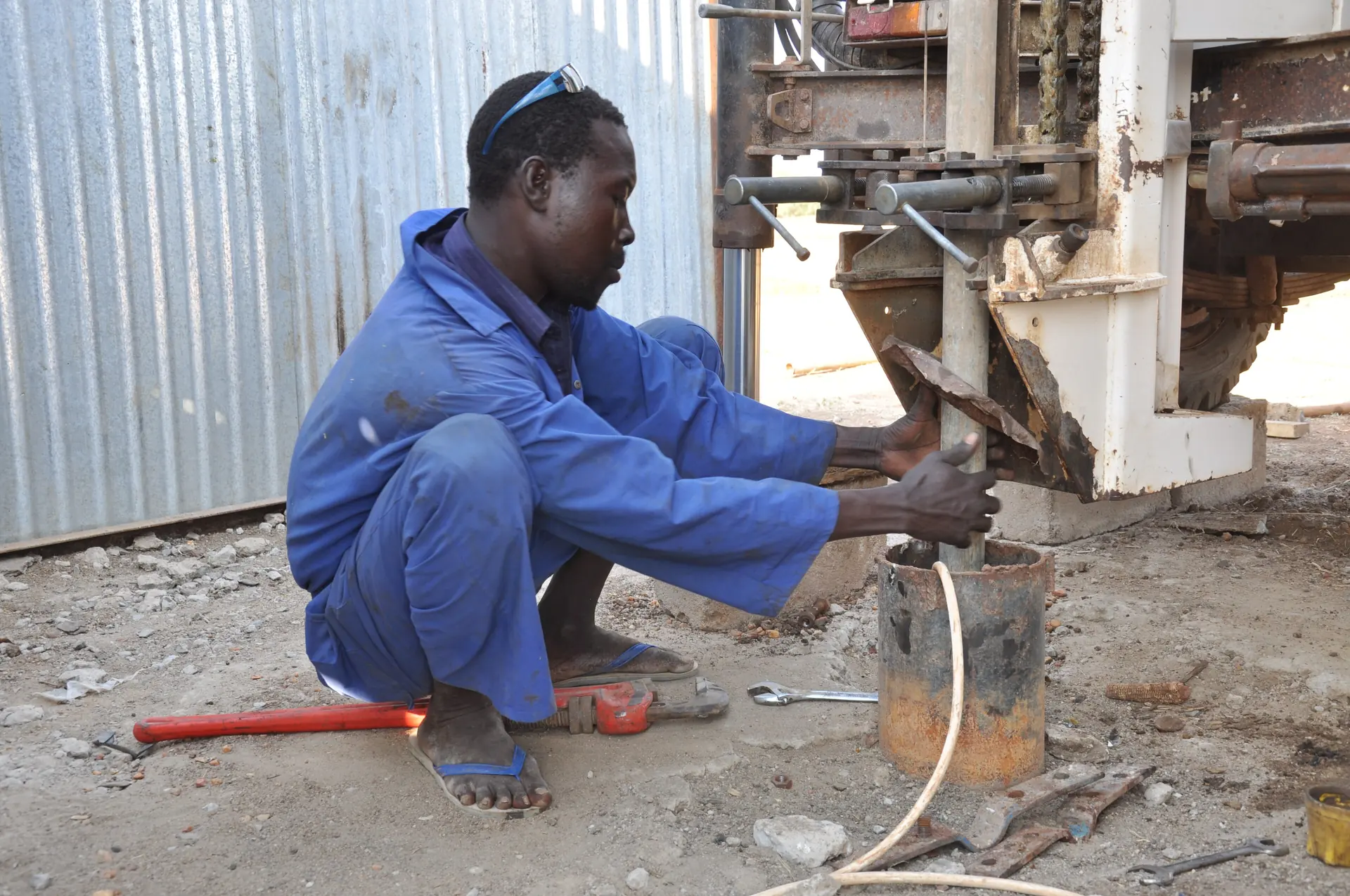
Photo: Oxfam East Africa, drilling for clean water in Upper Nile, South Sudan. CC BY 2.0, via Wikimedia Commons.
450 m
Maximum drilling depth
30 yrs
Combined team experience
17+
International NGO clients
6
Countries served
What we do
Because we survey, drill, construct and equip each water point ourselves, there is never a gap between contractors, and never a question about who is responsible for the result.
Air-rotary water wells from 100 mm to 1000 mm diameter, to depths of 450 metres.
Read more →Professional geologists and surveyors run pre-drilling siting and post-drilling analysis.
Read more →Casing, gravel packing, grouting, development and concrete apron casting.
Read more →U2, U3 and India Mark II hand pump supply, installation and commissioning.
Read more →Who we are
Sub Saharan Drilling was formed in early 2013 and focuses on delivering quality boreholes to NGOs, the Uganda Wildlife Authority and communities, as well as test hole drilling for mining companies in the region. The rig is air rotary, and both compressors and drill were completely overhauled in 2013.
The team has been carrying out borehole drilling for years across the northern, eastern and western regions of Uganda and in the Democratic Republic of Congo. We have highly experienced technicians, drilling operators and support workers, plus professional geologists and surveyors for pre and post drilling analysis.
More about the company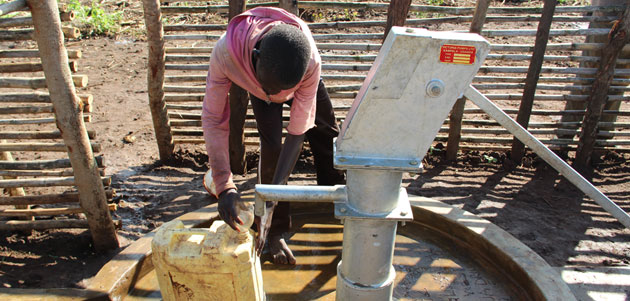
Track record
Borehole drilled and completed for Pastor Salomon Mwesige with Stop Hunger Now and Feed the Hungry in the Rwamwanja settlement.
Contract to drill 20 boreholes and construct 12 pit latrines in the refugee settlements of Kiryandongo and Kamwenge.
Four-borehole project completed in Kiryandongo for Global H2O.
Who we work for
A donor-funded community water point, a district asset, a school supply and a mining camp are different engineering and reporting problems. We treat them that way.
Our drilling team has completed water programmes for Unicef, MSF Holland, AMREF, World Vision, Oxfam, the World Food Programme, GOAL, Medair, Global H2O, Mercy Corps, Action Against Hunger, Caritas and others across Uganda and the DRC..
Read more →We have delivered work under government contract in the districts of Pallisa, Kitgum, Pader and Lamwo, including a four-borehole programme in Pallisa completed in November 2013..
Read more →Institutions and businesses need sustained yield and piped distribution rather than a queue at a hand pump.
Read more →Alongside community water supply, Sub Saharan Drilling carries out test hole drilling for mining companies in the region and provides water supply for camps and processing operations..
Read more →Coverage
Geology, depth and access change from district to district. Each page sets out what we know about the area and what we have delivered there.
Guides
Technical and commercial notes from the field, so you can plan a water programme without having to take a contractor's word for anything.
A borehole quotation is not one number, it is eight. Understanding which line items are fixed, which scale with depth and which are genuinely uncertain is the difference between a budget that holds and a project that stalls half-drilled.
Read the guide →Siting is the cheapest part of a borehole and the part that decides whether the rest of the money is well spent. Here is what a survey actually involves, and what a siting report should contain.
Read the guide →Depth is decided by the rock, not by the budget. Understanding what the crew sees as the hole advances explains why the honest answer to "how deep" is a range, not a number.
Read the guide →Trusted by
The drilling team has completed water programmes for these international NGOs, alongside contracts for the districts of Pallisa, Kitgum, Pader and Lamwo.
Answers
Straight answers to the questions clients ask before commissioning a borehole.
Sub Saharan Drilling drills water wells to depths of up to 450 metres, with completed diameters from 100 mm (4 inches) to 1000 mm (40 inches), using air-rotary rigs.
The team drills across Sub Saharan Africa, principally in the northern, eastern and western regions of Uganda and in the Democratic Republic of Congo, and takes contracts in South Sudan, Kenya, Tanzania and Ethiopia.
A typical community borehole is sited, drilled, cased, developed, test pumped and fitted with a hand pump within one to two weeks, depending on formation, depth and site access.
Yes. Sub Saharan Drilling offers a free, no-obligation estimating service. Call +256 793 036 679 or send the contact form and an advisor will arrange a survey of the site.
Clients include international NGOs such as Unicef, MSF Holland, AMREF, World Vision, Oxfam, the World Food Programme, GOAL, Medair, Global H2O, Mercy Corps, Action Against Hunger and Caritas, as well as the Uganda Wildlife Authority, district governments and private landowners.
Sub Saharan Drilling uses air-rotary drilling. The rig and both compressors were completely overhauled in 2013, when the water drilling assets of ADT Africa were acquired together with the drilling and administration teams.
Tell us the district, the number of water points and the timeline. We reply with a free, no-obligation estimate and a siting plan.