When to take the sample
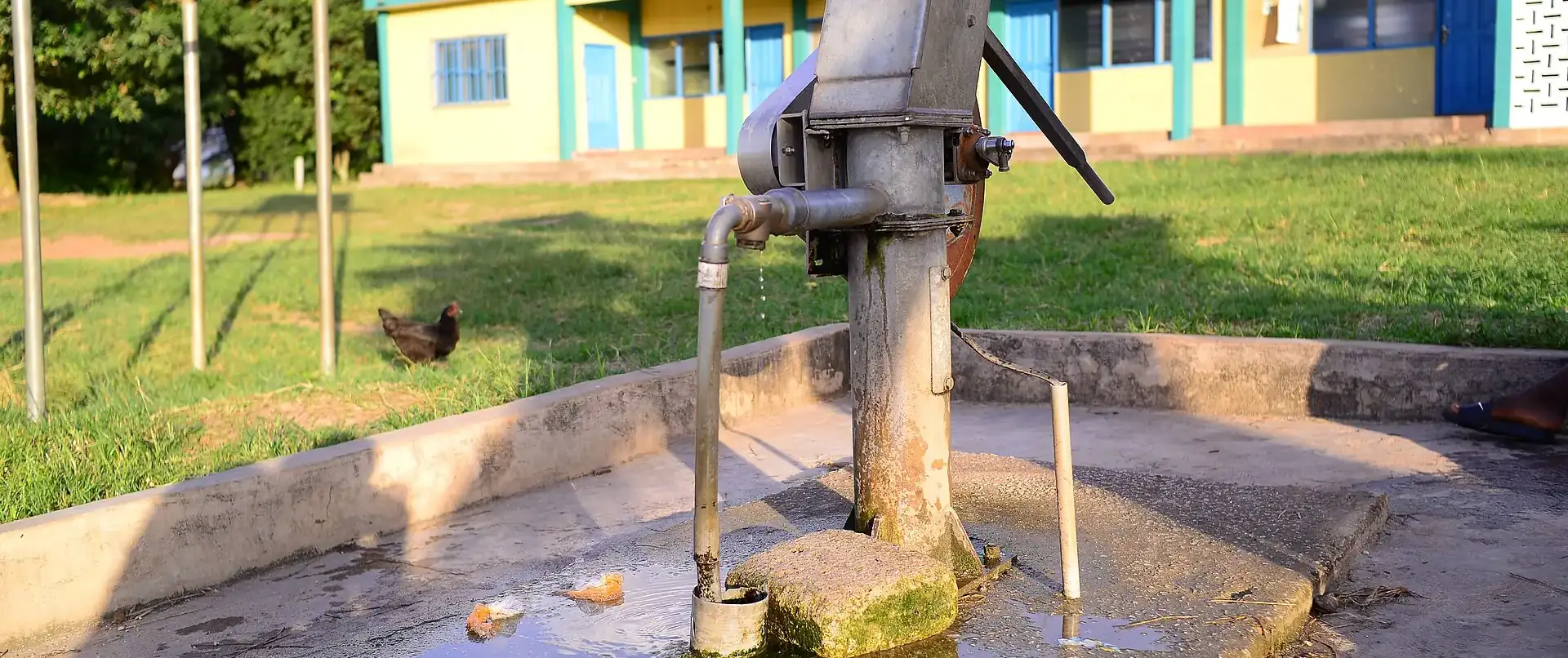
A sample taken from a hole that has just been drilled tells you about drilling, not about the aquifer. The well must first be developed until it runs clean and then test pumped, so that the water arriving at the surface is aquifer water rather than a mixture of formation fines, air and residue.
Samples are collected in clean, correctly preserved containers and delivered to the laboratory within the holding time for the parameters concerned. Bacteriological samples in particular degrade quickly and must be kept cool and analysed fast.
What gets tested
A standard post-drilling suite covers three groups.
- Physical: turbidity, colour, odour, temperature, total dissolved solids and electrical conductivity.
- Chemical: pH, iron, manganese, fluoride, nitrate, chloride, sulphate, total hardness.
- Bacteriological: total coliforms and E. coli, as the direct indicator of faecal contamination.
The problems that actually turn up
Iron and manganese are the most common complaints in the region. They are rarely a health hazard at the levels seen, but they stain clothing and cooking pots and give the water a metallic taste, and communities will walk back to a contaminated open source rather than drink it. The fix is usually an aeration and filtration step, or in some cases a different completion that avoids the iron-rich horizon.
Fluoride is a genuine health concern where it occurs, particularly in volcanic terrain, because there is no cheap household fix. Salinity rises in some sedimentary settings and near evaporative environments. Nitrate is almost always a signal of surface contamination from latrines or livestock rather than a property of the aquifer.
What bacteriological failure usually means
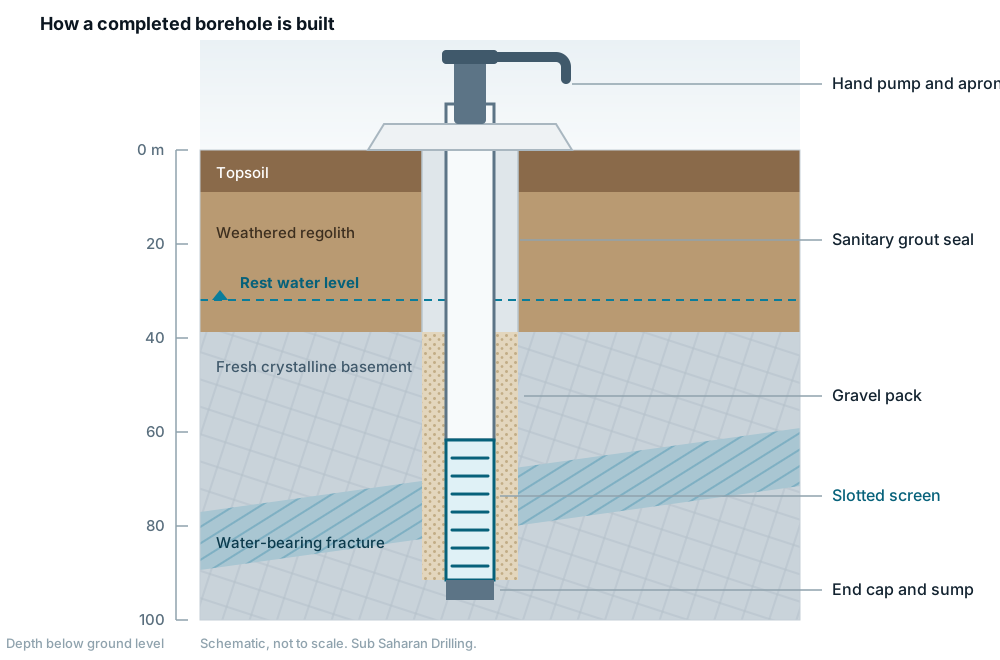
When E. coli appears in a new borehole, the aquifer is rarely at fault. In the great majority of cases the pathway is a failed sanitary seal, a cracked or absent apron letting surface water run down the outside of the casing, a poorly sited well too close to a latrine, or contamination introduced during pump installation.
That is why the grout seal, the apron and the drainage channel are not cosmetic finishing works. They are the barrier between a clean aquifer and a contaminated one, and they are the reason we cast them ourselves rather than leaving them to a separate contractor.
The completion report
Every well we hand over comes with the water quality results alongside the lithological log, the water strike depths, the casing and screen schedule, the test pumping data, the GPS coordinates and site photographs. Donors require it, districts need it for their asset registers, and any future rehabilitation depends on it.
Questions
Does Sub Saharan Drilling arrange laboratory testing?
Yes. Water quality sampling and laboratory analysis are part of a complete borehole contract, and the results are issued with the completion report.
What if the water fails a quality standard?
It depends on the parameter. Bacteriological failure normally means correcting the sanitary seal or apron and re-testing. Iron and manganese are usually handled with aeration and filtration. Fluoride and high salinity may mean the well is unsuitable for drinking and an alternative site is needed.
Talk it through with the drilling team
Estimates are free and carry no obligation. Call +256 793 036 679 or send the details of your site.