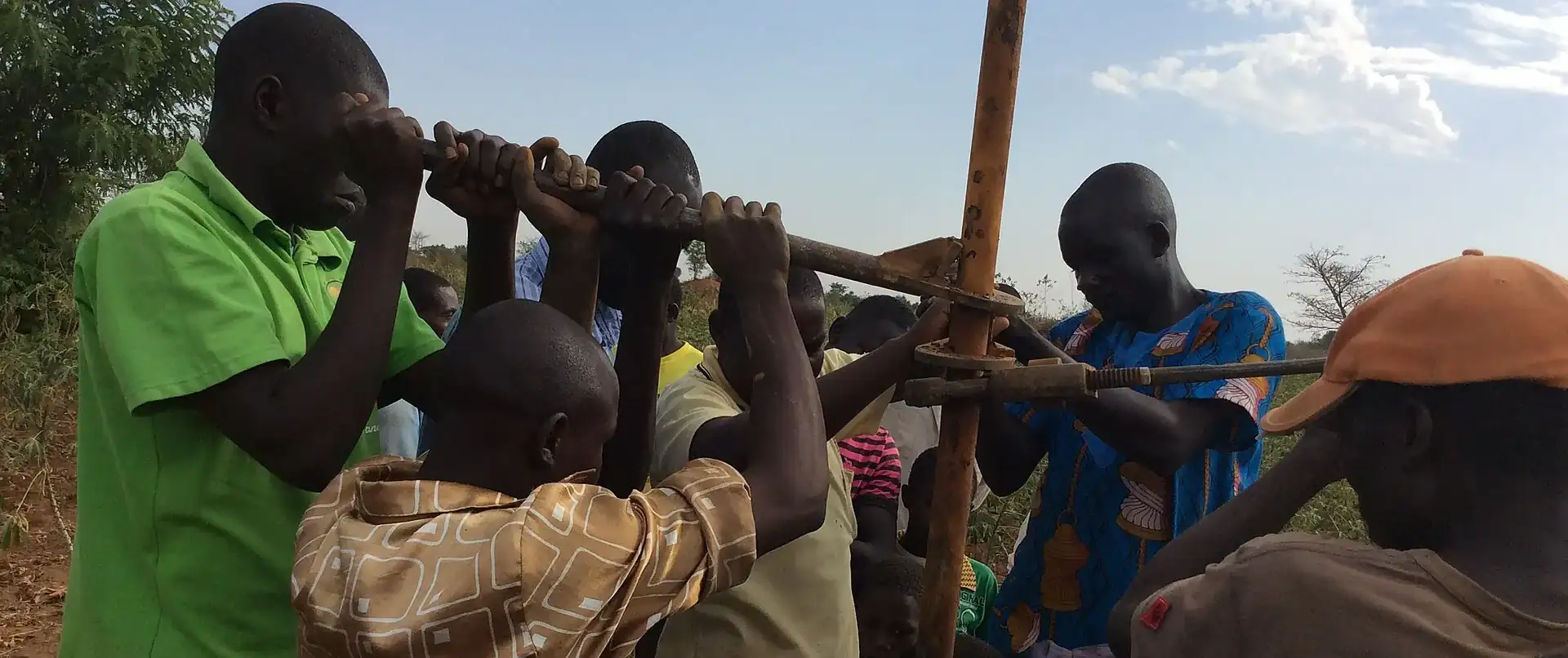
Why water points die
Walk any sub-county and you will find hand pumps standing over perfectly good boreholes, out of service for want of a part worth a few tens of thousands of shillings. The aquifer is intact; the institution around it collapsed. A water user committee that never collected fees, a caretaker who was trained and then moved away, a spare part that has to come from Kampala.
This is why we treat committee training and a written maintenance plan as part of the deliverable rather than as a nicety, and why we prefer to install a pump the district already supports.
Routine maintenance that actually matters
Most of the work is simple, cheap and done by the caretaker.
- Check and tighten pump head bolts monthly; loose bolts destroy the head casting.
- Watch for a change in handle resistance or in discharge per stroke; both signal worn seals.
- Keep the apron, drainage channel and soak pit clean, unblocked and crack-free.
- Keep livestock away from the apron and maintain the fence if there is one.
- Replace cup seals on schedule rather than after failure.
- Record every repair, its date and its cost, in a book kept by the committee.
Diagnosing a declining well
When yield falls, the cause is usually one of four things: the pumping water level has genuinely dropped, often seasonally; the screen has clogged with iron bacteria or fines; the pump cylinder or seals are worn; or the rising main is leaking so water falls back down the hole.
These are distinguishable. A pump problem shows up as poor discharge with a normal recovery of the water level. A screen or aquifer problem shows up in the drawdown behaviour under test pumping. Guessing between them is how communities end up buying a new pump for a screen problem.
Rehabilitation versus replacement
Because the drilling itself is the largest single cost of a water point, rehabilitating an existing borehole is usually far cheaper than drilling a new one. Redevelopment by airlifting and surging can clear a clogged screen and restore much of the original yield. A collapsed or badly corroded casing, a hole that was never grouted, or a well sited so close to a latrine that contamination is structural, are the cases where replacement is the honest answer.
Sub Saharan Drilling assesses existing wells and gives a straight recommendation either way. Where a rehabilitation is viable, it can often be done in the same mobilisation as new drilling elsewhere in the district, which makes it cheaper again.
Build the maintenance in at handover
At handover we train the water user committee, walk the caretaker through the pump, hand over the completion report and leave a written maintenance schedule. A water point handed over without those four things is a water point with a shorter life, whatever its yield on the day of commissioning.
Questions
Does Sub Saharan Drilling rehabilitate boreholes drilled by other contractors?
Yes. We assess the existing well, redevelop and flush it, re-equip it where appropriate, and rebuild the apron and drainage works. If the well is beyond economic repair we say so rather than taking the contract.
How often should a hand pump be serviced?
Basic checks by the caretaker should be monthly, with a fuller service including seal inspection at least annually, and cup seals replaced on schedule rather than after failure.
Talk it through with the drilling team
Estimates are free and carry no obligation. Call +256 793 036 679 or send the details of your site.